
01 / Prepare before panic
Choose while
you have time.
The best time to choose responders and safety preferences is before the urgent moment.
Work, journeys, visits and everyday movement take us beyond the people and places we know best. Safara grew from a personal question: if something happens while I’m away, how will the people I trust know I may need help?
A difficult journey, an unsafe meeting or an unexpected situation can happen far from home. Family and friends may not know where you were going, when you expected to arrive, or who should check on you.
Safara is designed around preparing that context before urgency takes over.
Choose trusted responders, circles and available communication paths in advance. If you need help, you can manually start an emergency workflow with that preparation already in place.
For a journey, that can mean deciding who you’ll contact and sharing the context with people you trust before you leave.
How the Emergency Plan works ↗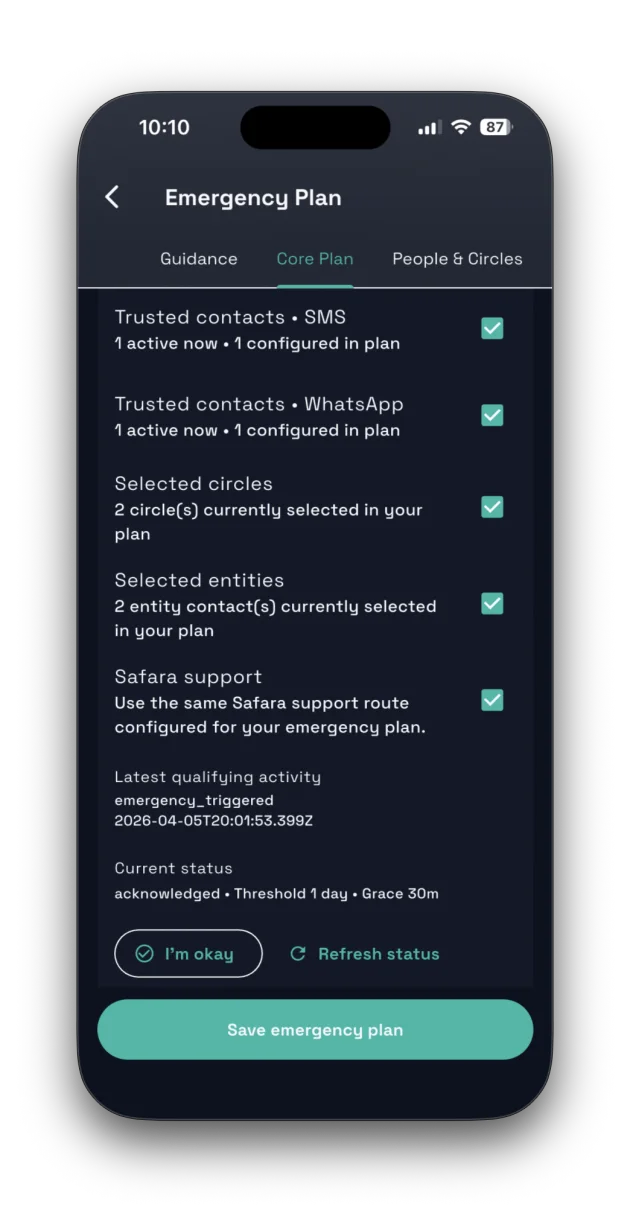
Families stay connected even when work and travel take them far apart. Our goal is to support that connection to trusted people and communities, alongside local emergency services.
The best time to choose responders and safety preferences is before the urgent moment.
An alert is more useful when trusted people understand the journey, situation and follow-up path.
Technology should help people reach people. Software itself is not the rescuer.
We’re exploring how safety coordination could become less dependent on carrying and operating a smartphone, including wearable devices and alternative connectivity. These are research directions, not currently available Safara products.
Start with Safara Free. Available for iOS and Android.